
Exosomes: research, marketed products and regulatory status
Cells communicate partly through tiny packages that carry biological cargo. Exosome research asks whether we can turn that communication system into useful treatments. Early human studies offer some encouraging skin findings, alongside disappointing results elsewhere. Understanding the promise starts with a simple point: the contents of the package, and where it is delivered, matter.
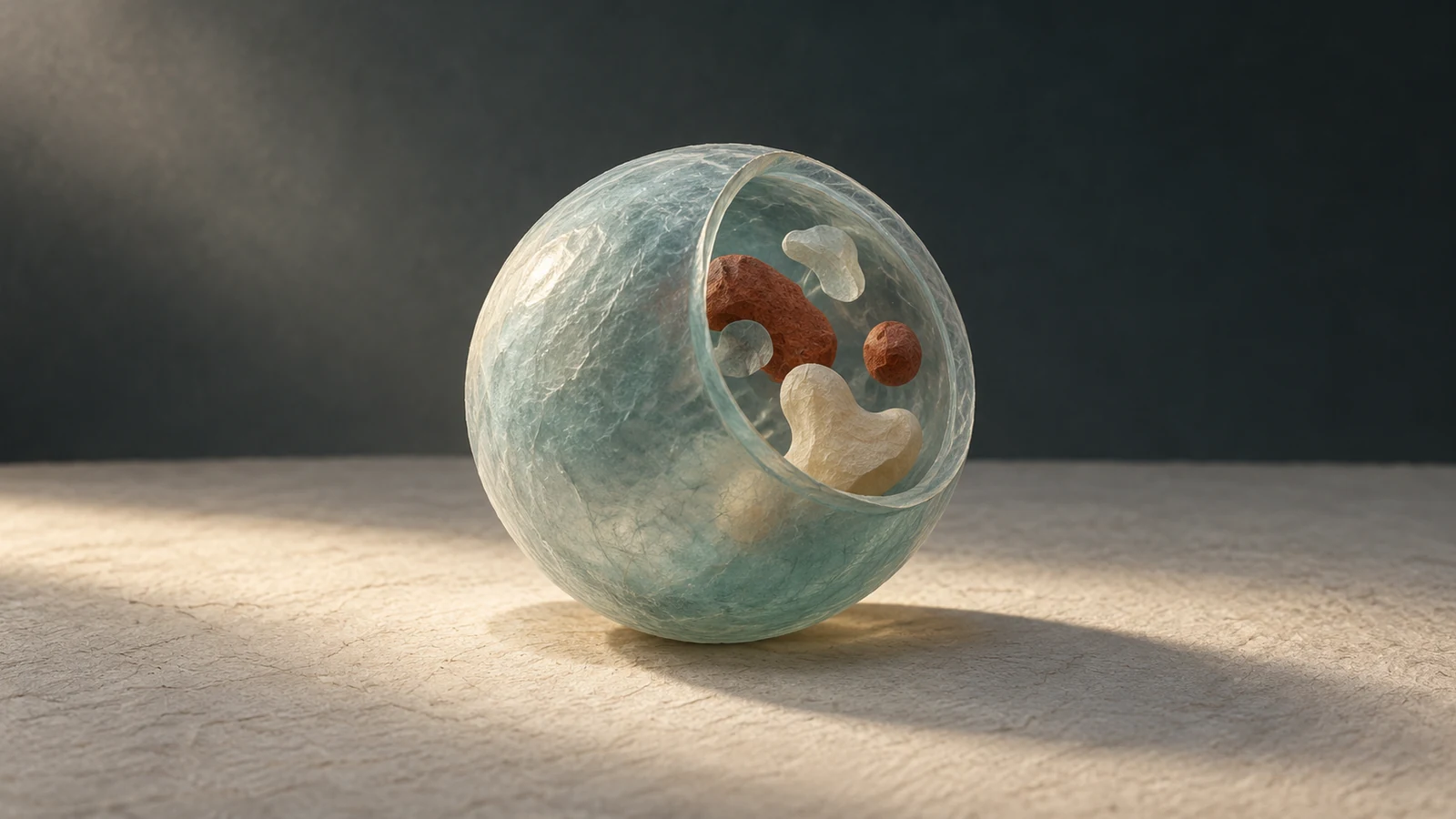
Cells are constantly exchanging information. One way they do this is by releasing tiny membrane-wrapped packages that carry biological material. These extracellular vesicles have attracted researchers who hope to use cell communication to support repair and develop new treatments. Exosomes are one particular type of vesicle. [4]
It is an appealing idea: use some of the signals cells release without transplanting the cells themselves. Human studies are beginning to test parts of that idea. The results are interesting, but they are much more specific than the broad claims often attached to an “exosome treatment.”
What is inside the package?
Vesicles are not living cells and cannot reproduce independently. Their contents depend on the cells that release them and on how the preparation is collected and processed. A product may also contain other particles and molecules alongside the vesicles. [4]
That is why a count such as “billions of exosomes” tells only a small part of the story. It does not tell us whether the preparation is pure, what biological activity it has or what dose could help a patient. Researchers also use the broader term “extracellular vesicles” when the specific origin required to call them exosomes has not been established.
For treatment, the important question is whether a well-characterized preparation can produce a useful effect in a particular place. Applying a formulation to skin, injecting a knee and infusing it into a vein expose the body in very different ways.
Encouraging findings in skin research
In a small 2020 study of acne scars, 25 people received laser treatment on both sides of the face. One side then received an exosome-containing gel and the other a control gel. After 12 weeks, the side treated with the exosome gel showed a greater improvement in scar scores. This suggests that the gel added something under those conditions. It did not test the gel on its own or as an infusion. [6]
A 2026 study of 16 adults tested another formulation on one side of the face, with saline on the other, using ultrasound to assist application. The treated side showed improvements in hydration and elasticity over eight weeks. Because the formulation included other ingredients, the study could not separate the contribution of exosomes from the rest of the mixture. [17]
These are worthwhile clues for skin research. They call for larger studies of the actual preparations and procedures, with enough follow-up to understand how long any benefit lasts.
Different questions have produced different answers
A 2024 study in people with arthritis in both knees compared an injection of placental-cell-derived vesicles in one knee with saline in the other. It found no clear advantage in pain, function or MRI outcomes during follow-up of up to six months. The small study reported no severe local or systemic complications, but it could not establish safety for other products or longer use. [8]
ExoFlo, an intravenous vesicle preparation, was studied in 102 people with severe COVID-19-related respiratory failure. The higher-dose group did not show a clear survival advantage over placebo on the trial’s main measure. Later analyses of selected groups were more encouraging, giving researchers questions to test further. This was research in critically ill patients, not a test of healthy aging. [9]
A small 2026 longevity pilot combined lifestyle advice, supplements and infusions of a mixture of substances released by participants’ own cells. It reported lower biological-age scores, but had no comparison group and changed several things at once. It therefore cannot show whether the infusions caused the changes or whether people became healthier as a result. The infused mixture was not a defined exosome product. [14]
Together, these studies show why the field needs specific questions. A useful skin result, an unsuccessful knee comparison and a preliminary critical-care finding can all be true. They concern different preparations doing different jobs.
From research to a marketed product
US regulation follows the product and its intended use. Exosome products used to treat disease generally fall under drug and biological-product requirements. As of September 2026, no exosome product had FDA approval. [1] [2] [3]
Terms such as “cosmetic,” “topical” or “research use” do not settle the question. Claims to regenerate tissue or treat a condition can change the regulatory classification. Permission to investigate a product also differs from approval to sell it as a treatment. [5] [10]
The procedure matters too. FDA clearance of a microneedling device does not mean that an exosome product used with it has been approved for delivery into the skin. The combination needs its own assessment. [7]
Safety starts before administration
Being free of living cells does not make a preparation harmless. Sterility, donor screening, unwanted substances, storage and consistency between batches all matter, especially for injected products. FDA has reported serious adverse events after unapproved products marketed as exosomes and has identified manufacturing problems in named suppliers. These reports make quality a practical patient-care issue. [1] [3] [11]
A well-run study can help identify risks, but small numbers and short follow-up may miss rare or delayed problems. Reassuring language such as “natural” cannot answer those questions.
What to ask about a proposed treatment
At Healthy Longevity Clinic, our approach to evaluating treatment evidence connects the benefit someone wants with the intervention actually studied. Better skin hydration is a relevant result for a skin treatment. It does not tell us whether an infusion improves mobility, metabolic health or long-term well-being.
Ask for the exact product, its source and composition, the proposed route and the human study supporting that use. If it is part of a trial, ask who leads it, who reviews participant safety and what investigational authorization applies. The consent discussion should explain alternatives, costs, follow-up and care for complications. [1]
The scientific opportunity is to understand these cellular messages well enough to make reliable medicines. Each carefully tested preparation moves that work forward. A broad label on a vial cannot do that work on its own.
What remains uncertain
Most studies were small or short. Some tested combinations of treatments, so the contribution of the vesicles alone remains unclear. Results from skin, joint or critical-care studies cannot be transferred directly to infusions for otherwise healthy people. Long-term benefits, uncommon harms and consistency between products remain important questions.
References
- Public Safety Notification on Exosome Products.
- Approved Cellular and Gene Therapy Products.
- R3 Medical Companies warning letter, CBER 26-726330.
- Minimal information for studies of extracellular vesicles (MISEV2023): From basic to advanced approaches.
- Is It a Cosmetic, a Drug, or Both? (Or Is It Soap?)
- Combination Treatment with Human Adipose Tissue Stem Cell-derived Exosomes and Fractional CO₂ Laser for Acne Scars: A 12-week Prospective, Double-blind, Randomized, Split-face Study.
- Microneedling Devices.
- Safety and efficacy of placental mesenchymal stromal cells-derived extracellular vesicles in knee osteoarthritis: a randomized, triple-blind, placebo-controlled clinical trial.
- Bone Marrow Mesenchymal Stem Cell-Derived Extracellular Vesicle Infusion for the Treatment of Respiratory Failure From COVID-19: A Randomized, Placebo-Controlled Dosing Clinical Trial.
- Supreme Rejuvenation, LLC warning letter, CBER 25-700749.
- Platinum Biologics LLC warning letter, CBER 25-705090.
- 2026 Florida Statutes, §458.3245.
- Company science and investigational protein-medicine description.
- A multi-modal longevity protocol integrating lifestyle, supplements, and autologous pro-regenerative cell-conditioned media: a pilot study.
- Electronic Human Cell and Tissue Establishment Registration System: Instructions.
- Corrigendum to: Chest. 2023;164(6):1444–1453.
- Adipose tissue-derived stem cell exosomes enhance skin barrier function and show exploratory associations with the skin mycobiome in aging skin.
Disclosure
Prepared with AI assistance. ExoCoBio supplied products for the skin studies and funded the 2026 study. Direct Biologics funded ExoFlo, with company roles disclosed by authors. Authors of the longevity pilot reported employment at Wellbeing International Foundation and xLongevity. The knee study reported no external funding or competing interests.