
NAD infusions: what the human studies show
NAD helps cells turn nutrients into usable energy, which makes it a compelling target for research into aging and disease. Scientists are testing whether giving it by infusion can improve health. An encouraging heart-failure study offers one clue; smaller studies explain what happens during a drip. Together, they show where the idea is promising and why benefits for everyday energy, memory and healthy aging still need direct testing.
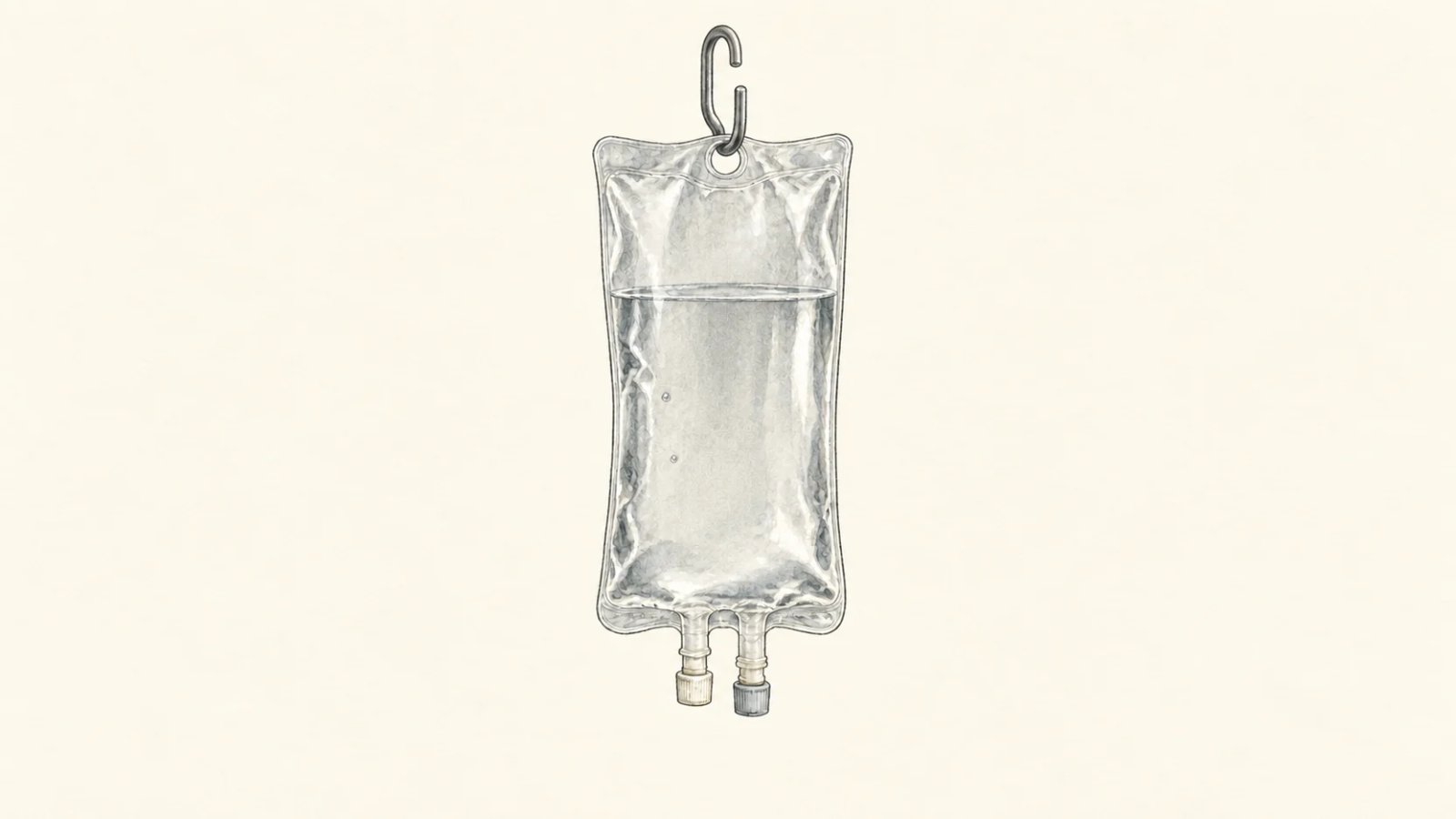
NAD is part of the chemistry that keeps our cells working. Its full name, nicotinamide adenine dinucleotide, is less important than its job: helping energy-producing reactions and other essential cellular processes run. That biology has inspired research into ways of increasing NAD, from oral supplements to infusions. [1]
The interesting question is what happens next. Can supplying more of a useful molecule help a person feel or function better? Human studies are beginning to explore that question, with different answers depending on the treatment and the people receiving it.
A promising result in heart failure
One trial enrolled 180 people whose heart muscle had been damaged by poor blood supply. Alongside their usual heart-failure care, they received either NAD or a placebo infusion for seven days. A month later, the NAD group showed a greater improvement in the heart’s pumping ability. [9]
Researchers also followed serious events such as heart attack, stroke and unplanned heart-failure admission. Fewer occurred in the NAD group over six months, but the trial could not establish reliably that treatment caused that difference. A larger study could help answer whether better pumping translates into fewer serious problems.
An earlier trial in 58 hospitalized heart-failure patients did not find a clear advantage in pumping function or a key heart-failure blood marker. Taken together, the studies provide a useful reason to continue research in this disease. They did not test a wellness course in healthy adults. [10]
Why the form of NAD matters
NAD infusions, injectable nicotinamide riboside (NR), and capsules containing NR or nicotinamide mononucleotide (NMN) take different routes into the body. NR and NMN are building materials from which cells can make NAD. Supplying a building material by mouth is different from putting NAD directly into the circulation.
Even an infusion must interact with the body’s transport and breakdown processes. A rise in a blood measurement cannot tell us, on its own, how much reaches a particular tissue or whether it improves that tissue’s function. This is why a finding about capsules does not settle the question about a drip. [1]
What happens during an infusion
A small 2019 experiment followed NAD and its breakdown products in blood and urine over eight hours. It helped describe the body’s handling of an infusion. Lasting fatigue relief and dementia prevention were not measured. [1]
Later pilots compared NAD with NR and other treatments. They add information about blood measurements, infusion time and comfort. Two reports were released as preprints, meaning they had not undergone journal peer review in the versions cited here. Their small groups and short follow-up leave long-term benefits and uncommon harms unresolved. [3] [11]
A 2026 review of records from 14 clinic clients found more discomfort with NAD than with NR, including digestive symptoms and chest pressure. NR was generally easier to tolerate, although symptoms occurred with it too. Because this was a small, nonrandomized comparison without placebo, it cannot tell us which treatment produces lasting health benefits. [2]
Comfort matters to anyone having an infusion. It is also a different question from effectiveness: a drip can be easy to receive without improving energy or memory, while a useful treatment for serious illness may involve discomfort.
The quality of the finished product
Injectable products need controls that go beyond those used for ingredients intended to be swallowed. The FDA has warned about food-grade NAD used in sterile preparations without suitable processing. Its concerns include microbes and bacterial endotoxins, which can trigger harmful reactions. [4]
In a 2026 warning letter, the agency described three patients becoming unwell after receiving an NAD-containing preparation from one vial. An unopened vial from the same lot contained excessive endotoxins. This was a problem with a particular lot, not a measurement of how often all NAD infusions cause harm. It does show why manufacturing and handling matter alongside the molecule itself. [5]
Chest pressure, severe shaking or other concerning symptoms during an infusion need immediate clinical attention. They should not be treated as a sign that the infusion is working.
Understanding the medicine being offered
In the United States, compounded drugs are not FDA-approved products. “Off-label” refers to using an approved drug outside its approved labeling; it does not turn an unapproved preparation into an approved medicine. [6] [8]
In its October 2025 notice, the Czech regulator SÚKL stated that NAD infusion preparations were unregistered medicines in Czechia and could not be advertised. That statement concerns Czech medicines and advertising rules. The relevant status of any preparation depends on the country and the specific product. [7]
What would make the research useful to you
At Healthy Longevity Clinic, we start with the outcome a person wants: more energy, clearer thinking or better physical function. Our approach to evaluating evidence asks how well a study connects the treatment to that outcome.
The heart-failure result gives researchers a concrete next question: does the improvement in pumping persist and reduce serious events? For persistent fatigue or memory concerns, studies need to measure those problems in comparable people over a meaningful period.
If low energy is your concern, a conversation about sleep, illness, medicines and other possible causes is more informative than assuming an NAD deficiency. The biology makes NAD worth studying. The next advances will come from showing who benefits, how much, and for how long.
What remains uncertain
The heart-failure studies involved people with established disease. Wellness studies were small or brief, and some were preprints or retrospective comparisons. They cannot settle long-term benefit or uncommon harms. Product quality and regulatory status need to be assessed for the actual preparation.
References
- A pilot study investigating changes in the human plasma and urine NAD+ metabolome during a 6 hour intravenous infusion of NAD+.
- Intravenous infusion of NAD+ versus nicotinamide riboside: a retrospective tolerability pilot study in a real-world setting.
- Preliminary safety analysis of two pilot clinical trials involving injections of Niagen, nicotinamide riboside chloride.
- FDA reminds compounders to use ingredients suitable for sterile compounding.
- Warning letter to GenoGenix LLC, 718739.
- Understanding the risks of compounded drugs.
- Reklama na léčivé přípravky zaměřená na širokou veřejnost [Advertising of medicines to the general public].
- Understanding unapproved use of approved drugs (off-label).
- Effect of nicotinamide adenine dinucleotide on heart failure caused by ischemic cardiomyopathy: a randomized, placebo-controlled trial.
- Effects of nicotinamide adenine dinucleotide on older patients with heart failure.
- Randomized, placebo-controlled, pilot clinical study evaluating acute Niagen+ IV and NAD+ IV in healthy adults.
Disclosure
Prepared with AI assistance. Several early studies disclosed ties to infusion clinics or suppliers. ChromaDex funded the two cited preprints, which included employee authors; the 2026 preprint also reported patents and contracted research. The larger heart-failure study declared no relevant potential conflicts. The smaller study reported hospital and Knature Company grants, while stating company noninvolvement. Full disclosures appear in the linked studies.