
Plasma exchange and aging clocks: what the human trial found
Could changing the proteins circulating in our blood influence aging? Plasma-exchange research is exploring that possibility. A small human study found encouraging changes in some biological-age measurements partway through treatment, raising new questions about how the procedure affects the body. To understand the finding, it helps to know what an aging clock measures, why the treatment combination matters, and what researchers still need to learn about lasting health benefits.
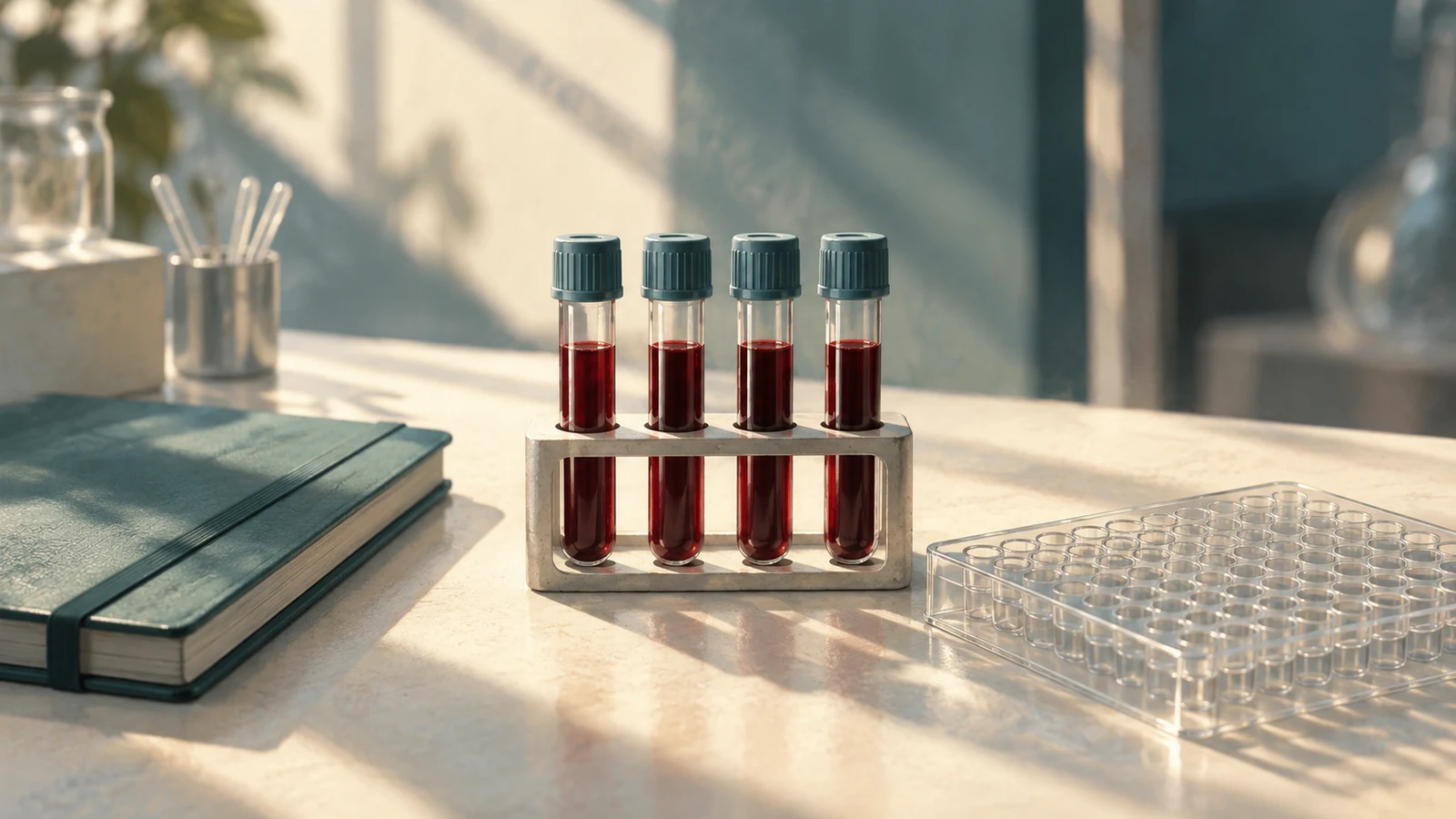
Plasma exchange changes part of the environment our cells live in. It removes some of the liquid portion of blood and replaces it with a prescribed fluid. The technique already helps treat selected illnesses. Its possible role in healthy aging begins with a different question: could changing circulating proteins influence how the body functions as we get older? [5]
A small human study published in 2025 offers clues. It found changes in several molecular measurements during treatment, with the most striking result in a group that also received an antibody preparation. Understanding that result requires looking at the whole course of the study. [1]
What the study tested
Participants were generally healthy adults, mostly over 50. They received one of several schedules of plasma exchange or a simulated procedure used for comparison. Removed plasma was replaced with albumin solution, containing a major blood protein. One group also received intravenous immunoglobulin, known as IVIG, which contains human antibodies. [1] [2]
This was not a young-plasma transfusion. It also differed from ordinary plasma donation, which collects plasma without the same replacement treatment. The distinction matters because both what is removed and what is added can influence the body.
What “2.6 years younger” means here
At an intermediate blood test, the authors reported an average reduction of about 2.6 years across aging measurements in the exchange-plus-IVIG group and about 1.3 years in the monthly-exchange group, assessed against the simulated procedure. [1]
Those numbers came from epigenetic clocks. These tools read chemical markings on DNA and use them to estimate aspects of biological aging. A shift toward a younger pattern can be scientifically interesting. It does not mean that a person has gained that number of years of life.
The later measurement adds an important part of the story: by the final blood sample, the average clock changes in the treatment groups were no longer clearly different from the comparison group. The study therefore points to a biological response worth exploring, while leaving its durability and health meaning open. [1]
For someone hoping to remain active and independent, the next step is to connect a molecular change with a useful outcome: better function, fewer illnesses or a longer healthy life. That connection has to be demonstrated for the treatment being studied. [4]
Why the added antibodies matter
The combination group also showed changes in immune cells and circulating proteins. IVIG could have contributed to those changes, but the study did not include a group receiving IVIG alone. It therefore cannot tell us how much came from exchange, how much from the antibodies and how much from their interaction. [1]
This is a useful direction for the next experiment. Separating the components would help researchers understand the biology and identify which parts of the procedure are necessary. A few dozen participants, different treatment calendars and differences between groups at the start also make larger, more carefully matched comparisons valuable.
What a separate donation study found
Our contribution to this research
Healthy Longevity Clinic is proud of Petr Sramek's contribution to a separate Czech study of plasma donation and aging markers. As an HLC-affiliated coauthor, he helped develop the study concept and acquire funding. The research was supported by Charles University. [3]
That study followed first-time donors aged 40 to 60 through repeated plasma collections. It did not find clear epigenetic rejuvenation, and some clock estimates increased. Those findings do not mean donation shortened life; they show that removing plasma alone did not produce the hoped-for change in these measurements. [3]
Comparing the two studies makes the field more informative. Donation and exchange with albumin or IVIG are different interventions. Their results help refine which biological ideas deserve testing, rather than supporting one sweeping claim about everything involving plasma.
Benefit and safety need to be studied together
Plasma exchange is a medical procedure. Possible problems include low blood pressure, changes in mineral levels, reactions to replacement fluid and complications from venous access. In the exchange trial, two participants left the combination group, with one discontinuation described as IVIG-related; a mild albumin reaction was also reported among those who completed the study. [1] [5]
IVIG has additional risks. For example, the prescribing information for Privigen, an IVIG product, includes warnings about blood clots and kidney injury. That does not identify the brand used in this trial; it explains why an antibody preparation needs its own clinical assessment. [6]
The reason for treatment shapes the decision. An established benefit for a serious illness can justify burdens that require a different discussion when the goal is healthy aging.
Where this leaves the research
Healthy Longevity Clinic’s approach to clinical research connects biological measurements with the outcomes people care about. The intermediate clock findings are an interesting starting point. A stronger next study would test whether the changes repeat, persist after treatment and accompany better health or function.
Our published clinical follow-up of TPE adds observations from measurements made over a course of care. Those observations and the controlled comparison discussed here address different parts of the same wider question.
If you are considering plasma exchange, the useful conversation begins with the exact procedure and your health goal. Ask what benefit is expected, how it will be measured and what would lead to changing or stopping treatment. The science is developing; a fixed promise of years “reversed” goes beyond what these studies establish.
What remains uncertain
The study was small, used different treatment schedules and could not separate the effect of IVIG from exchange. It did not establish lasting improvements in function, disease or lifespan. Larger comparisons and longer follow-up are needed to understand both benefit and risk.
References
- Multi-Omics Analysis Reveals Biomarkers That Contribute to Biological Age Rejuvenation in Response to Single-Blinded Randomized Placebo-Controlled Therapeutic Plasma Exchange.
- The Effects of Therapeutic Plasma Exchange on Age Related Biomarkers and Epigenetics.
- Human clinical trial of plasmapheresis effects on biomarkers of aging (efficacy and safety trial).
- FDA Facts: Biomarkers and Surrogate Endpoints.
- Plasma Exchange Service at NHNN.
- Privigen: approved product information and prescribing information.
- Therapeutic Plasma Exchange.
Disclosure
Prepared with AI assistance. Healthy Longevity Clinic has a clinical and commercial interest in plasma exchange. Petr Sramek contributed to the separate Czech donation study, which reported Charles University support. The exchange study disclosed relationships with Circulate and Edifice Health; its publication and registry provide further details. This article explains research and does not prescribe a treatment schedule.