
Protecting muscle during weight-loss treatment
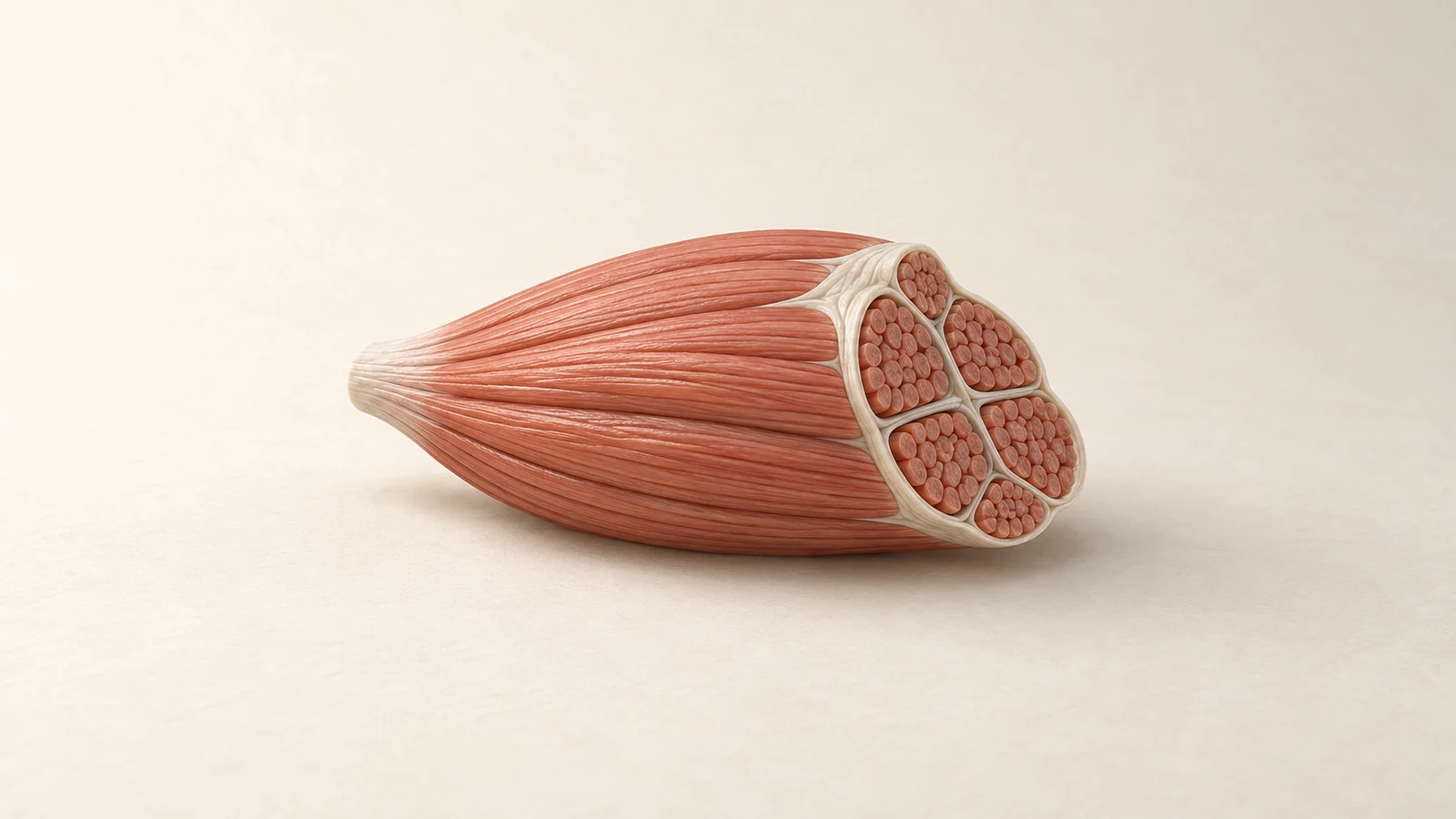
Semaglutide and tirzepatide can reduce lean tissue as well as fat. Exercise and adequate nutrition help make strength and independence central to weight-loss care. Bimagrumab has human body-composition results; MitoRx’s MTRX31 and Juvena’s JUV-161 explore further muscle-preserving approaches at earlier stages. Healthy Longevity Clinic compares what the findings mean for physical function, beyond a lower number on the scale.
Longevitytech.fund — supporting longevity research
We are proud of Longevitytech.fund's support for MitoRx research into mitochondrial metabolism and muscle preservation. As of September 22, 2026, MitoRx's public investor list named Longevitytech.fund. Juvena Therapeutics, whose muscle research is also covered here, is another company in the fund’s portfolio. We are proud to support both approaches to preserving physical capacity. [15][12]
What is useful now, and what remains experimental?
Shown: substantial fat loss with semaglutide and tirzepatide can accompany reductions in measured lean mass. Structured exercise alongside liraglutide preserved lean mass during a randomized year after initial diet-induced weight loss.[1] [2] [6]
Not shown: that all lean-mass loss is muscle loss, or that preserving a scan measurement guarantees better strength. Investigational add-on medicines have promising composition findings, but dependable functional benefit remains a separate question.[2] [4]
What would change the assessment: an add-on treatment that improves muscle and meaningful physical function, with acceptable harms, compared with the same weight-loss treatment and comparable nutrition and exercise support.
The evidence and development descriptions below are dated September 22, 2026. They cover current care, human investigational studies and animal experiments at different stages.
Lean mass is not a direct measure of muscle strength
A DXA scan estimates fat, lean soft tissue and bone mineral. Lean soft tissue includes muscle, but also other tissues and water. The scan cannot isolate the muscle fibers that produce movement or measure the force they generate.[2] [3] [4]
Two percentages are easily confused. The fraction of weight lost as lean tissue is different from the fraction of a person's total muscle lost. Also, lean tissue's share of body weight can rise while its absolute amount falls, if fat falls faster.
The exploratory STEP 1 analysis makes this clear. It included 140 adults without diabetes: 95 assigned to semaglutide 2.4 mg injected under the skin weekly and 45 to placebo, with lifestyle support in both groups. Over 68 weeks, the semaglutide group lost 19.3% of fat mass and 9.7% of lean mass, while lean tissue's share of body weight rose by three percentage points. These are different measurements, not contradictory results. The analysis was reported as a meeting abstract and involved a selected scan subgroup.[1]
The SURMOUNT-1 scan substudy enrolled 255 people; 160 had usable baseline and follow-up scans and were analyzed. The follow-up scan could be at week 72 or when treatment stopped early. Three missing week-72 values were estimated from the last available observation. Results pooled the weekly 5, 10 and 15 mg tirzepatide groups, with 124 people receiving tirzepatide and 36 receiving placebo; both groups had lifestyle counseling.[2]
Measurement in the 72-week analysis | Tirzepatide | Placebo |
|---|---|---|
Body weight | Decreased 21.3% | Decreased 5.3% |
Fat mass | Decreased 33.9% | Decreased 8.2% |
Lean mass | Decreased 10.9% | Decreased 2.6% |
In both groups, approximately 75% of the weight lost was fat and 25% was lean mass. Similar proportions do not show that tirzepatide specifically damages muscle, and they do not guarantee protection for an individual. Only people with usable repeat scans contributed to the analysis, and it did not directly measure strength.[2]
A published correction changed one figure's unit label from percent to kilograms. It did not change the separate percentage results above. Knowing whether a graph shows kilograms, percent change or a share of total weight matters to its interpretation.[5]
Protect function while treating obesity
A practical starting point is what you can do comfortably before or early in treatment: rise from a chair, climb stairs, carry shopping or complete familiar exercise. A clinician can add standardized strength or movement assessments suited to the individual. Repeating suitable measures gives a more useful picture of function than the scale alone.[3]
A joint advisory from four professional societies recommends assessing nutritional intake, managing digestive symptoms that interfere with eating and combining adequate protein with strength training. Reduced appetite can make eating enough harder. Protein alone is unlikely to replace the stimulus that muscles receive from training.[3]
The conversation can stay concrete: Are nausea or early fullness causing missed meals? Which foods remain appealing? What resistance exercise is manageable and sustainable? How should it change if pain, disability, illness or limited access makes it difficult? A registered dietitian or appropriately qualified exercise professional can help make the plan workable. The goal is adequate intake and activity tailored to capacity, not a universal protein prescription or exercise routine.[3]
Exercise has also been tested with medication. In S-LITE, 195 adults aged 18–65 without diabetes were randomized after losing weight during an initial eight-week low-calorie diet. They received structured exercise, liraglutide, both, or placebo with usual activity for 52 weeks. Combining exercise with liraglutide improved body-fat percentage and preserved lean mass during that randomized year. Groups that included exercise improved cardiorespiratory fitness, the ability of the heart and lungs to support activity.[6]
The program mixed supervised cycling and circuit training with individual exercise. It was not a resistance-only study or a protein-supplement trial. It used liraglutide, and its lean-mass preservation result concerns the year after randomization, not the preceding diet. It supports structured activity during medication care without proving that one routine prevents all muscle loss with semaglutide, tirzepatide or every other drug.[6]
Follow-up therefore needs to ask whether food intake is adequate, symptoms are manageable, activity is sustainable and everyday function is holding up. Declining strength or mobility is a reason to review the whole situation with the treatment team. A scan can inform that conversation; it cannot replace it.[3]
Can an additional medicine change what weight is lost?
Bimagrumab is an investigational antibody that blocks activin type II receptors, affecting signals involved in fat and lean tissue. The 2026 BELIEVE publication tested it in 507 adults with obesity, or overweight plus a complication, without diabetes. Participants were randomized to placebo, bimagrumab, semaglutide or combinations for an initial 48 weeks.[4]
Lean mass fell approximately 0.8%–2.3% across combination groups, versus 4.7%–6.9% in the semaglutide groups. Fat loss was greater with the combinations. This analysis aimed to estimate outcomes regardless of whether participants stopped treatment, with missing observations filled in statistically. The result supports the possibility of changing weight-loss composition with a second medicine.[4]
Strength results were less consistent. Grip strength was exploratory and analyzed under different assumptions about continuing treatment. Most groups showed no statistically significant advantage over placebo; one combination group did. That result cannot be merged with the lean-mass estimates as if they used the same analysis.[4]
There were also important practical and safety limits:
377 of the 507 participants, or 74.4%, completed the initial treatment period.
Muscle spasms, diarrhea and acne occurred with bimagrumab.
Semaglutide was given openly, although the bimagrumab treatment was blinded.
The many statistical comparisons were not adjusted for multiplicity, which increases the chance of an apparently positive finding that is due to chance.[4]
Preserving more lean tissue on a scan is encouraging. Dependable improvement in strength, mobility and daily activities still needs to be demonstrated separately. Bimagrumab remains an investigational result here, not an add-on recommendation.
A separate bimagrumab–tirzepatide study, NCT06901349, planned to enroll people with overweight or obesity and type 2 diabetes. Its September 24, 2025 registry update lists it as withdrawn, with zero actual participants, for sponsor-stated strategic business reasons. This was a different study from BELIEVE. A study stopped before enrollment supplies no negative efficacy result and does not establish that an entire drug program has ended.[14]
MitoRx: a metabolic approach tested in mice
MitoRx Therapeutics is developing MTRX31, also called Myo-004, to influence mitochondrial metabolism. Its proposed aim is to reduce abnormal fat accumulation while preserving lean tissue through a mechanism distinct from appetite suppression.[7]
On June 8, 2026, the company reported a two-month study in mice with diet-induced obesity. The mice were housed at thermoneutrality, a temperature that reduces the extra energy they would otherwise use to keep warm. The company reported fat reduction without lean-mass loss and improved grip strength at the end of the experiment. Comparisons included a carrier-only control, tirzepatide, bimagrumab and selected combinations.[7]
These findings came through conference and company materials, not a complete peer-reviewed human efficacy study. A reported advantage over another treatment is specific to the animals, doses and conditions tested. It does not establish superiority over tirzepatide in patients or human safety.[7]
The September 2026 pipeline describes development toward a clinical candidate for injection under the skin, with an oral derivative at an earlier stage. MTRX31 is a research program to follow; the mouse findings do not identify a treatment for someone currently losing strength during weight loss.[8]
Juvena: early human studies and a separate mouse result
Juvena's JUV-161 is an engineered protein derived from insulin-like growth factor 2, designed to affect signaling involved in muscle growth and repair. Its September 2026 pipeline also lists JUV-112, a separate preclinical program for metabolism and body composition. These are different candidates.[9]
The first JUV-161 human study, NCT06918925, is a randomized, masked, placebo-controlled trial of single and repeated doses injected under the skin in 72 healthy volunteers at Australian sites. It focuses on safety and pharmacokinetics—how the body handles the drug—with observations through day 60.[10]
Juvena describes phase 1 as completed in August 2026. The registry's August 10 update still labels the study active but not recruiting. No registry results dataset was posted as of September 22, 2026. The company and registry may refer to different milestones; neither statement supplies the missing clinical results.[9] [10]
A second trial, NCT07397468, plans about 36 healthy volunteers at a New Zealand site, with temporary immobilization of one lower limb. It randomly assigns participants to JUV-161 or placebo, with treatment assignment concealed. The protocol specifies seven injections under the skin over six weeks and measures thigh-muscle volume by magnetic resonance imaging (MRI) on days 15 and 45, along with other outcomes. Safety follow-up extends to day 96. Its April 20, 2026 registry record still lists recruiting and contains no results dataset. These dated entries on a US registry describe studies in Australia and New Zealand, not US trial locations or confirmation of present availability.[10] [11]
The immobilization trial excludes people actively pursuing weight loss. Muscle loss from disuse is a useful experimental model, but it is not weight loss during treatment with a GLP-1 medicine such as semaglutide. Even a positive result would need further testing before establishing benefit in that setting.[11]
An August 10, 2026 conference abstract gives a more direct preclinical link to semaglutide. Juvena researchers treated male db/db mice, a model of severe diabetes, with a carrier-only control, JUV-161, semaglutide or the combination for 21 days, using 12–15 animals per group. They reported lean-mass preservation, increased muscle weights and improved strength with JUV-161, alongside metabolic changes. Short-term findings in these mice do not establish prevention of weakness during human weight-loss treatment.[13]
Juvena also discloses a Lilly research and licensing collaboration, including an upfront payment and equity investment, concerning muscle health and body composition. A development partnership is separate from evidence of patient benefit. The company identifies its candidates as investigational and states that their safety and effectiveness have not been established.[9]
How Healthy Longevity Clinic experts evaluate the evidence
The clinical goal is to treat excess fat while preserving what a person needs to do: get out of a chair, walk comfortably, carry things and remain independent. HLC's interpretation treats weight, scan-measured lean tissue and physical function as related but separate outcomes. A larger lean-tissue share can accompany a fall in its absolute amount, and a better scan does not automatically mean stronger muscles.[1] [2] [3] [4]
The evidence already supports a useful plan for care: assess intake and limiting symptoms, combine adequate protein with suitable strength activity, and follow function over time. That plan can be discussed while investigational medicines develop. The S-LITE finding strengthens the case for structured exercise alongside medication, within the population, drug and program actually tested.[3] [6]
BELIEVE is a good example of a real advance that needs a further test. It shows that a drug combination can change the composition of weight loss, yet most grip-strength comparisons were not positive. For a reader worried about weakness, HLC gives functional outcomes weight alongside the scan finding, treatment completion and adverse effects.[4]
An add-on would become more persuasive if a controlled study compared the same weight-loss regimen with and without it, provided comparable nutrition and activity support, and found durable improvements in muscle and daily function with acceptable harms. Studies need to include people likely to benefit, rather than assuming that healthy volunteers or mice represent frail older adults. Investment supports the work of answering those questions; it does not answer them in advance.
Three questions for a treatment review
What changes in strength, mobility or everyday activities will we follow alongside weight and body composition?
Is reduced appetite or nausea limiting my food intake, and how can adequate nutrition and sustainable strength exercise be supported?
If strength or mobility declines, what would trigger reassessment of the treatment plan, and what evidence supports any proposed additional medicine?
Common questions
Does losing a quarter of the weight as lean mass mean losing a quarter of my muscle?
No. The percentage refers to the composition of the weight lost, not to all the muscle in the body. DXA lean mass also includes tissue and water other than skeletal muscle.[2]
Can protein replace strength training?
The joint advisory recommends adequate protein together with strength training. Protein alone is unlikely to replace the training stimulus; both should fit the person's needs and capacity.[3]
Is an investigational muscle-preserving drug ready to add to my treatment?
The human composition findings deserve attention, but they do not establish a routine add-on with dependable functional benefit. MitoRx's findings remain in mice, and Juvena's early human protocols do not yet provide the relevant published benefit during GLP-1 weight loss.[4] [7] [8] [9] [10] [11] [13]
What remains uncertain
Scan substudies include selected participants and do not directly measure muscle strength. BELIEVE had many participants who did not complete treatment, missing-data assumptions, open-label semaglutide and unadjusted multiple comparisons; its lean and grip analyses answer different questions. Mouse results, healthy-volunteer studies and temporary immobilization cannot establish benefit in frail older adults losing weight. Dated company and registry milestones do not provide missing trial outcomes or live enrollment.
References
- Impact of semaglutide on body composition in adults with overweight or obesity: exploratory analysis of the STEP 1 study.
- Body composition changes during weight reduction with tirzepatide in the SURMOUNT-1 study.
- Nutritional priorities to support GLP-1 therapy for obesity: a joint advisory.
- Bimagrumab plus semaglutide alone or in combination for the treatment of obesity: a randomized phase 2 trial.
- Correction to the SURMOUNT-1 body-composition report.
- Healthy weight loss maintenance with exercise, liraglutide, or both combined.
- MTRX31 preclinical data presented at ADA 2026.
- Pipeline.
- Pipeline and clinical status, September 2026.
- NCT06918925: first-in-human JUV-161 study.
- NCT07397468: JUV-161 muscle-disuse atrophy study.
- About us: investors.
- JUV-161 restores glucose homeostasis and skeletal muscle function in Type 2 diabetic mouse model.
- NCT06901349: Bimagrumab and tirzepatide in obesity or overweight with type 2 diabetes.
- Longevitytech.fund. Official portfolio, checked September 26, 2026.
Disclosure
Prepared with AI assistance. MitoRx’s public investor list named Longevitytech.fund as of September 22, 2026. Juvena discloses Lilly research, licensing and equity involvement. BELIEVE was sponsored and designed by Versanis Bio, a Lilly subsidiary, with sponsor employees among the authors and medical-writing assistance disclosed. SURMOUNT-1 was sponsor-funded, and the MitoRx and Juvena mouse reports are company-associated. These relationships do not establish treatment benefit. This article provides education, not a drug regimen. Juvena Therapeutics is also listed in Longevitytech.fund’s portfolio.