
Shingles vaccination and dementia: how to interpret the evidence
A vaccine best known for preventing a painful rash has become an unexpected lead in dementia research. Several studies suggest that shingles vaccination may also help protect the brain. The possibility is exciting, but the results are not yet conclusive. Here is how a birthday rule opened this line of research—and what it means for vaccination decisions today.
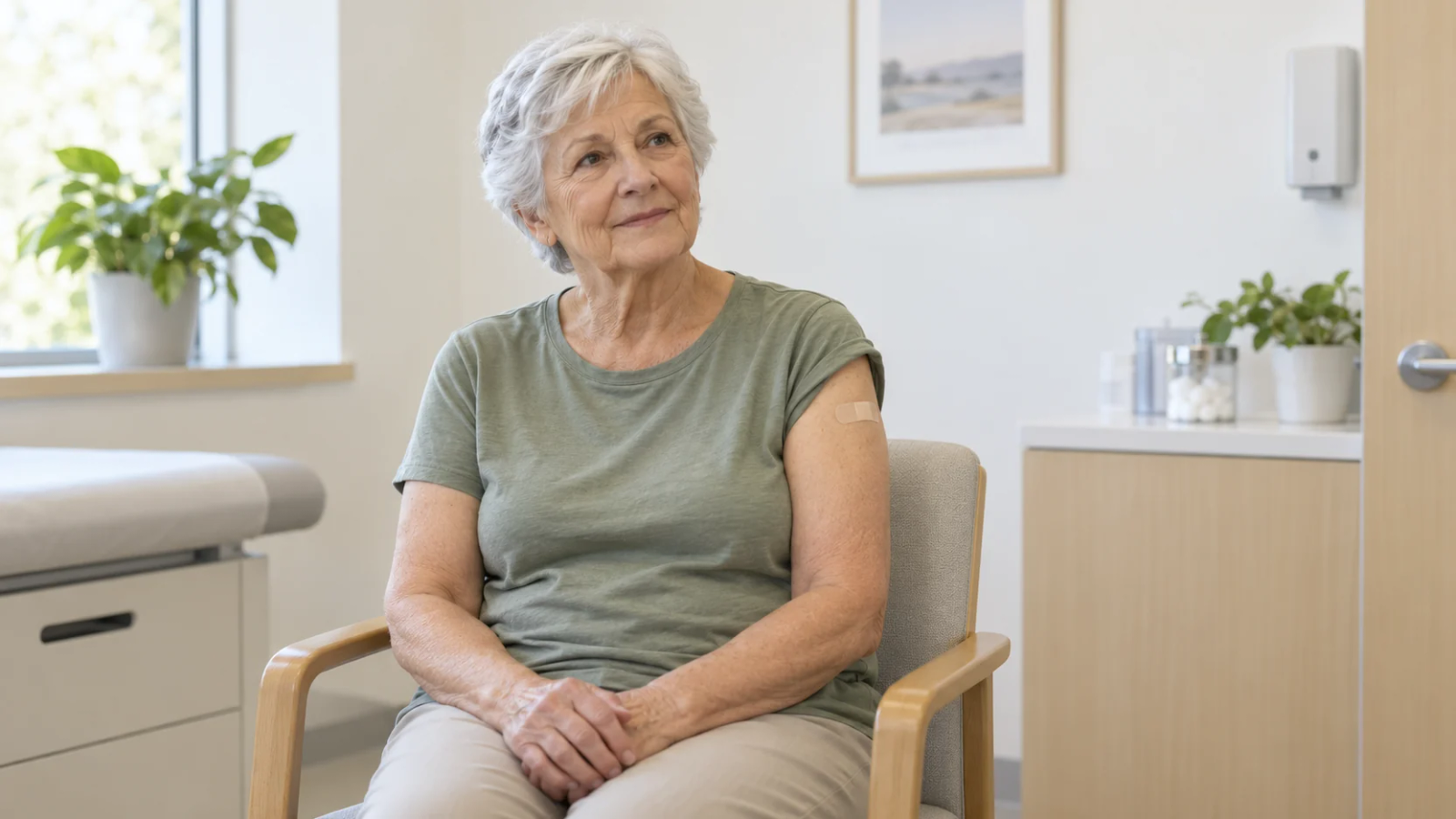
One of the most intriguing clues in dementia prevention began with a birthday rule. In Wales, being born just before or after a particular date determined whether an older person could receive a publicly funded shingles vaccine. Researchers saw an opportunity to ask an unexpected question: might this vaccine also help protect the brain? [1]
Several studies have since found encouraging links between vaccination and fewer dementia diagnoses. The findings have also sparked a serious scientific debate. For readers, the distinction is straightforward: shingles prevention is an established benefit; brain protection is a promising possibility still being tested.
Why a birthday made a useful comparison
People who choose vaccination may also be more likely to seek preventive care or differ in their health from people who do not. That makes it difficult to tell how much of a later health difference comes from the vaccine itself.
The Welsh rule offered a clever way around part of that problem. Two people born only a few days apart were likely to be similar in age and health, but one could be eligible for the vaccination program while the other was not. Researchers call this a natural experiment: a policy creates a comparison that would otherwise be difficult to make.
Among people close to age 80, the researchers estimated that receiving the older vaccine, Zostavax, was associated with roughly three to four fewer dementia diagnoses per 100 people over seven years. That is a meaningful possibility. It remains an estimate from a policy comparison, however, rather than the result of randomly assigning people to receive a vaccine. [1]
Studies in Australia and Canada using similar age rules also found fewer diagnoses among people eligible for vaccination. They strengthened interest in the idea, although being offered a vaccine is not the same as actually receiving it. [4] [5]
Why the answer is still open
A September 2026 analysis challenged how much protection those studies could reasonably imply. When its authors combined some of the reported benefits with the proportion of people actually vaccinated, the calculated effects looked implausibly large. Incomplete vaccination records and differences between datasets complicate that calculation too. The debate concerns both whether the vaccine protects the brain and how large any benefit might be. [4] [5] [7]
A separate analysis of hospital records in England found a reduction in shingles but no clear reduction in dementia. That work was released as a preprint, meaning it had not yet completed journal peer review, and it lacked some of the richer health records used in Wales. Its result does not close the question, but it shows that the same encouraging pattern does not appear everywhere. [8]
Other Welsh research has explored whether vaccination might influence later stages of cognitive illness. Those findings add to the questions worth investigating; they do not show that a vaccine restores memory or treats established dementia. [6]
What about the vaccine used today?
The distinction between vaccines matters. Zostavax contained a live, weakened virus and is no longer used in the United States. Shingrix, the currently recommended US vaccine, contains a viral protein and an ingredient that strengthens the immune response. It is not a live vaccine. [2] [3]
Shingrix has encouraging dementia findings of its own. Studies comparing health records have associated it with fewer diagnoses or a longer period before diagnosis. These include a large US comparison with the older vaccine and studies of older adults, including people recovering after a stay in skilled nursing care. [9] [10] [13]
But the comparison group changes the apparent benefit. In one study, the association became smaller when Shingrix recipients were compared with people who had received another adult vaccine, rather than with unvaccinated people. This is a reminder that habits, health and access to care can influence the result alongside vaccination. [10]
Why might there be a brain benefit at all? Researchers are exploring whether preventing repeated viral activity could help, or whether vaccination has broader effects on the immune system. Neither explanation has been established, and dementia has many causes. [6] [9]
The next test is more direct
Trials in Finland and Denmark are using random assignment to compare groups offered Shingrix with comparison groups. This can help separate the vaccine’s effect from the reasons people normally choose to be vaccinated. These studies need years of observation to learn whether dementia diagnoses become less common. They had not reported completed dementia results in the September 2026 evidence. [11] [12]
What this means for your health
There is already a good reason for eligible people to discuss shingles vaccination: protection against shingles and its complications. In the United States, the CDC recommends two Shingrix doses for adults aged 50 or older, and for adults aged 19 or older with weakened or suppressed immunity. Previous shingles or an earlier Zostavax vaccination does not automatically remove that recommendation. Elsewhere, follow the recommendations that apply locally. [3]
Shingrix commonly causes temporary reactions such as a sore arm or feeling unwell. Its US label also describes a small increased risk of Guillain–Barré syndrome, a serious nerve disorder, in adults aged 65 or older. A clinician can consider age, immune status, previous doses and relevant medical history when discussing benefits and risks. [2]
At Healthy Longevity Clinic, our approach to evaluating evidence helps keep an exciting research finding connected to an appropriate decision. The possible brain benefit is a reason to follow this research closely. It does not yet justify extra doses, vaccination outside the relevant recommendations solely for dementia prevention, or replacing assessment of memory symptoms with a vaccination visit.
Protecting against shingles is worthwhile in its own right. Whether the same vaccination can also help preserve memory is one of the more hopeful questions now receiving a rigorous test.
What remains uncertain
The dementia findings so far come largely from health-record studies, where vaccinated and unvaccinated people may differ in other ways. Results vary between populations and vaccine types. They do not yet establish a reliable amount of dementia protection or show that vaccination treats existing memory problems.
References
- A natural experiment on the effect of herpes zoster vaccination on dementia.
- SHINGRIX product information and prescribing information.
- Shingles Vaccine Recommendations; Guillain-Barré Syndrome (GBS) and Vaccines.
- Herpes Zoster Vaccination and Dementia Occurrence.
- Herpes zoster vaccination and incident dementia in Canada: an analysis of natural experiments.
- The effect of shingles vaccination at different stages of the dementia disease course.
- Natural experiments of herpes zoster vaccination: Quantifying the implied vaccine effectiveness against dementia.
- Eligibility for shingles vaccination and hospital-coded dementia in England and Wales: a regression discontinuity analysis in England.
- The recombinant shingles vaccine is associated with lower risk of dementia.
- Recombinant zoster vaccine is associated with a reduced risk of dementia.
- NCT07502560: Shingrix and incident dementia in Finland.
- DAN-ZOSTER—Shingles Study 65+.
- Dementia Risk After Recombinant Herpes Zoster Vaccination in Older Adults With a Recent Skilled-Nursing Facility Stay: A Target Trial Emulation.
Disclosure
Prepared with AI assistance. GSK, the manufacturer of Shingrix, funded some observational studies and supports the Finnish and Danish trials. Some authors disclosed employment, shareholdings, consulting or institutional relationships with GSK. The article distinguishes established shingles prevention from the possible additional brain benefit.