
Plasma exchange and plasma donation: similar equipment, different goals
A donor centre collects plasma for other people. A hospital may exchange a patient’s plasma to remove harmful antibodies, as in some cases of myasthenia gravis or immune TTP. Following the fluid, the replacement and the treatment goal makes the difference concrete.
In both rooms, someone sits beside a machine while blood passes through tubing. In one room, a healthy donor is giving plasma. In the other, a patient is receiving therapeutic plasma exchange, or TPE. The equipment looks familiar, but the purpose and prescription are different.
Donation collects a component used in other people’s care. TPE removes and replaces a patient’s plasma to treat a defined problem. To understand the difference, follow what leaves the body and what comes back.
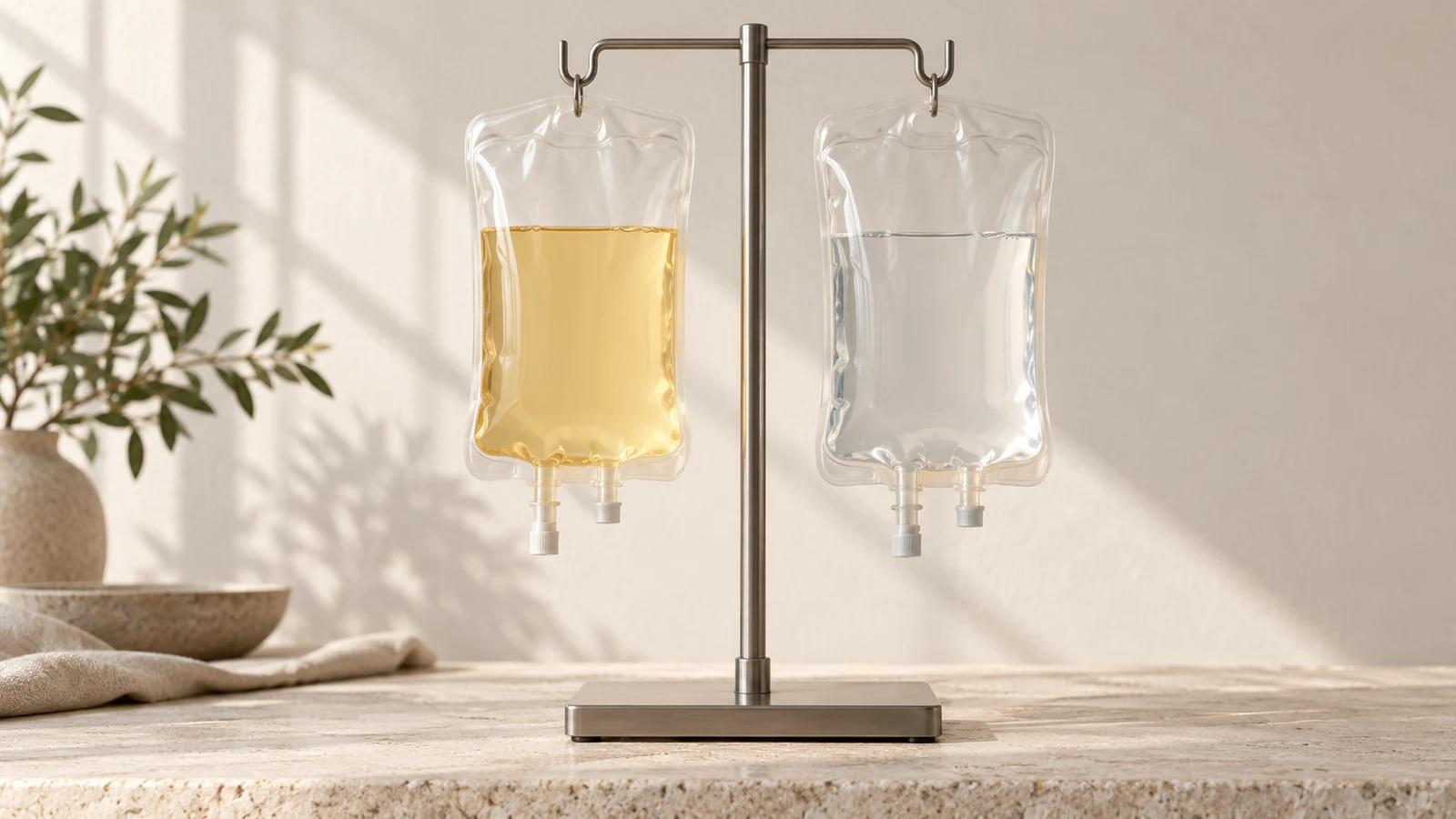
What is in the yellow fluid
Plasma is the liquid portion of blood. Alongside water and dissolved substances, it contains albumin, antibodies and clotting proteins. These are useful components of normal blood, not a collection of waste waiting to be removed.
An apheresis machine separates plasma from blood cells. In plasma donation, the cells return to the eligible donor while the plasma is collected; saline may be given as part of the process. Donation services apply their own eligibility and collection rules.
In therapeutic plasma exchange, the patient receives a prescribed replacement fluid as plasma is removed. This may be human albumin solution or donor plasma. They are not identical: donor plasma contains a broader range of proteins, while albumin solution replaces a selected component. The choice follows the illness being treated.
IVIG, intravenous immunoglobulin, is a separate preparation of antibodies that may accompany treatment in some protocols. It is not the standard fluid used to replace the volume of removed plasma.
Two hospital examples
In myasthenia gravis, harmful antibodies interfere with communication between nerves and muscles. A severe deterioration can cause swallowing or breathing difficulties. NHS guidance describes plasma exchange as one hospital treatment that removes those antibodies. The clinical aim is improved muscle function during serious illness.
In immune thrombotic thrombocytopenic purpura, or immune TTP, an immune attack reduces the activity of a protein called ADAMTS13, contributing to dangerous clots in small blood vessels. Plasma exchange removes harmful antibodies and supplies replacement plasma containing the needed protein, alongside other medical treatment. The NHLBI explains TTP and its treatment.
These examples show why “removing plasma” is an incomplete description. The target, replacement fluid and response being monitored give the procedure its medical meaning.
Donation and treatment side by side
Detail | Plasma donation | Therapeutic plasma exchange |
|---|---|---|
Person undergoing it | An eligible donor | A patient with a clinical treatment plan |
Immediate purpose | Collect plasma for other people’s care | Remove circulating substances relevant to the patient’s illness |
What returns | Blood cells, with fluid support as appropriate | Blood cells and a prescribed replacement fluid |
Amount and schedule | Set by donor collection rules | Set by the clinical prescription |
Meaningful outcome | A safely completed, appropriate donation | Improvement in the condition being treated, with acceptable harms |
Where aging research fits
The use of TPE for established illnesses does not by itself establish a benefit for healthy aging. That requires its own trials.
A 2025 randomized study by Fuentealba and colleagues enrolled 44 adults; 42 completed it. It compared small treatment groups, including TPE with IVIG, with a sham procedure. Clock results varied with treatment and timing: an intermediate signal did not become a statistically significant overall difference from sham at the final blood draw. The measurements were aging biomarkers, not additional years of life.
Our review of plasma exchange and aging clocks explains those time points. The separate article on TPE observations distinguishes reports made during care from controlled trial evidence.
A chemical-removal result is more specific than “detox”
The Gasiorowski trial followed 285 Australian firefighters for 52 weeks. It compared plasma donation, whole-blood donation and observation, measuring selected PFAS chemicals in blood. Plasma donation lowered their concentrations more than observation.
That is a concrete result about particular chemicals in an exposed group. It does not demonstrate fewer future illnesses, removal of every unwanted substance, or an equivalent effect from a different TPE protocol. The PFAS and donation guide follows this evidence further.
What monitoring looks like in practice
Tingling around the mouth or in the fingers is an example worth recognizing. Citrate, used to prevent clotting in the tubing, can temporarily lower available calcium. HHS describes this reaction in plasma donation, and hospital exchange teams also monitor symptoms and electrolyte changes. Such symptoms should be reported to the staff immediately.
UCLH’s patient information also describes low blood pressure, nausea and changes in electrolytes. Repeated exchange can affect clotting proteins; Cambridge University Hospitals explains why their levels may need monitoring. The procedure affects more than the single substance a person hopes to remove.
A donor appointment, treatment for myasthenia gravis and a trial of aging markers therefore have different endpoints. Matching the procedure to that endpoint is more useful than comparing how similar the machines look.
What remains uncertain
Medical indications, replacement fluids and donation rules are specific to the setting. Results from one illness, exposed group or research protocol cannot establish benefit for healthy longevity.
References
- Fuentealba M et al. Multi-Omics Analysis Reveals Biomarkers That Contribute to Biological Age Rejuvenation in Response to Single-Blinded Randomized Placebo-Controlled Therapeutic Plasma Exchange. Aging Cell. 2025. · Checked 2026-10-22
- Gasiorowski R et al. Effect of Plasma and Blood Donations on Levels of Perfluoroalkyl and Polyfluoroalkyl Substances in Firefighters in Australia: A Randomized Clinical Trial. JAMA Netw Open. 2022. · Checked 2026-10-22
- Cambridge University Hospitals NHS Foundation Trust. Plasma Exchange: Patient Information. · Checked 2026-10-22
- University College London Hospitals NHS Foundation Trust (NHNN). Plasma Exchange Service. · Checked 2026-10-22
- US Department of Health and Human Services. The process for giving plasma, step by step. · Checked 2026-10-22
- NHS. Myasthenia gravis: treatment.
- NHLBI. Thrombotic Thrombocytopenic Purpura (TTP).
- HHS Giving = Living. Common concerns about plasma donation: citrate reactions.
Disclosure
Prepared with AI assistance for Healthy Longevity Science, published by Healthy Longevity Clinic. This comparison does not announce the availability of a particular product or procedure.